

"*" indicates required fields
Licenses and Accreditations of Les entreprises CTM électrique …
Level 1 vs. Level 2 charging stations: What’s the difference for you?
For residential use, there are two types of charging stations: Level 1 and Level 2. Aside from price and installation, the main difference lies in charging speed, and it is significant.
Level 1 charging station (120V)
When you purchase an electric vehicle, a Level 1 portable charger is usually included. It plugs into a dedicated 120V standard outlet, which is convenient because this type of outlet is widely available.
Charging is slow, however: about 6 km of range per hour. For a plug-in hybrid vehicle, expect 6 to 8 hours. For a fully electric vehicle, it takes 11 to 16 hours for a full charge.
This is why a full charge every night is often necessary, which is suitable if you drive infrequently or have a long overnight parking period.
⚠️ Important: The 120V outlet used must be on a dedicated 20A circuit. Check your electrical circuits before using this option; an overloaded outlet can wear out prematurely and cause significant electrical problems.
Level 2 charging station (240V)
The Level 2 charging station operates on a dedicated 240V circuit, the same type used for your dryer or stove. This is the solution installed in the vast majority of homes in Quebec.
It offers a charging speed of approximately 37 km/h, which is up to five times faster than a standard outlet. For a 30 kWh battery, a full charge takes only 3 to 4 hours.
The result: your vehicle is fully charged every morning, no matter what time you get home at night.
Level 1 vs. Level 2: A Quick Comparison
| Criteria | Level 1 (120V) | Level 2 (240V) |
|---|---|---|
| Charging speed | ~6 km/h | ~37 km/h 5× faster |
| Time — full EV | 11 to 16 hours | 3 to 4 hours |
| Time — plug-in hybrid | 6 to 8 hours | 1 to 2 hours |
| Required installation | Dedicated 120V outlet | Dedicated 240V circuit |
| Master electrician RBQ | Recommended | Required |
| Eligible — rebate | No | Yes — Roulez Vert |
| Installation cost | Low | Moderate |
| Recommended for | Occasional use | Daily use |
Criteria for Choosing the Right Level 2 Charging Station
There are several factors to consider before choosing your charging station.
Here are the six key criteria that our electricians will review with you during the pre-installation inspection.
Terminal power and amperage
The higher the amperage of a charging station, the faster your vehicle will charge. Level 2 charging stations typically offer power outputs ranging from 7.2 kW (30 amps) to 9.6 kW (40 amps).
The right choice depends on your electric vehicle model and the capacity of your current electrical panel. Our electricians will help you choose the option that best suits your situation.
Technology and Connectivity (Online Portal)
Many charging stations offer an online portal or mobile app that lets you track your charging data, schedule charging times, and monitor your energy usage—whether you’re at home, at work, or on the go.
This feature is particularly useful if you want to optimize your electricity usage during Hydro-Québec’s off-peak hours.
Smart Power Sharing (multi-EV)
Planning to have two or more electric vehicles? A smart charging station with power-sharing management automatically distributes available power across multiple stations, without overloading your electrical panel or requiring an upgrade.
More and more manufacturers are offering this technology, and it is particularly recommended for condos, apartment buildings, and businesses.

Outdoor or indoor terminal?
In Quebec, the climate poses significant challenges: heat waves, extreme cold, freezing rain, and heavy rain are everyday occurrences. Some cables become brittle in extreme cold, and some charging stations cannot withstand humidity.
If you’re installing your charging station outdoors, make sure it’s certified for Quebec’s climate. Our electricians can help you choose the right model for your intended location.
Length of the connection cable
Newer models come with a charging cable that is 18 to 25 feet long (some are as long as 33 feet). The ideal length depends on the distance between your electrical panel and where you park your vehicle.
If the cable is too short, you’ll have to position your car precisely every time you charge it—a detail that quickly becomes a hassle in everyday life.

Manufacturer’s warranties
Level 2 charging stations are built to last. Most components are covered for more than 10 years. Warranties typically include the cables as well.
Many manufacturers also offer a network connection that allows you to monitor the station’s status remotely and receive real-time technical support—a real advantage if a problem arises after installation.
Residential, commercial, or condo charging station:
Which one is right for you?
The type of installation depends on your situation.
Whether you own a house, a business, or a condominium unit.
Here’s what sets each situation apart.

Residential charging station (single-family home)
Having a home charging station is the most convenient option for the vast majority of electric vehicle owners. No matter what type of car you have, your vehicle spends most of its time in your driveway or garage, so you might as well take advantage of that time to charge it.
A residential installation is generally the simplest: a dedicated 240V circuit is added to your existing electrical panel, and the charging station is mounted on your garage wall or outside your home.
If you’re thinking about buying an electric vehicle, now is the right time to plan your installation, you’ll be ready as soon as your car is delivered.

Commercial charging station
More and more businesses are installing charging stations for their customers or employees. With the rapid growth in the number of electric vehicles in Quebec, offering a charging station is becoming a real competitive advantage.
A commercial installation also demonstrates your company’s commitment to the environment, a factor that Quebec customers increasingly value.
Commercial installations may require multiple stations, power-sharing management, and user-based billing. Les entreprises CTM électriqueevaluates your situation and designs a solution tailored to your building’s electrical capacity.

Charging station for condos and apartment buildings
Installing a charging station in a condo or multi-unit building is technically more complex, but entirely feasible.
The main challenges involve finding the right location for the charging station, configuring the electrical circuit, implementing individual billing per unit, and obtaining approval from the condominium association.
Les entreprises CTM électrique is well-versed in the realities of Quebec condominiums. We can assist you in navigating the process with your homeowners’ association and propose tailored technical solutions, including smart power management for multiple residents.
Recommended charging station brands in Quebec
Choosing the right charging station is just as important as installing it.
Some models are better suited to Quebec’s climate, while others offer advanced smart features.
Here are the brands our electricians install most often—and why.
Popular residential charging stations
FLO Home G5
Grizzl-E Classic
A Canadian charging station offering unbeatable value for money. Highly cold-resistant, it is available in standard or smart (Wi-Fi) versions. Very popular for simple and efficient residential installations.
ChargePoint Home Flex
EVduty
BEQ Technology
Commercial and Condominium Charging Stations
Autel MaxiCharger
Wallbox Pulsar Plus
ChargePoint (commercial series)
⚠️ Important note: The models eligible for the Roulez Vert program are updated regularly by the Government of Quebec. Before purchasing your charging station, please verify that the exact model is included on the current official list. CTM Électrique is here to help you make the right choice and ensure that your installation is eligible for the subsidy from the start.
Installing your charging station:
What does the process actually involve?
At Les entreprises CTM électrique, every charging station installation follows a four-step process.
The goal: an installation that is compliant, safe, and eligible for government grants from day one.

Step 1: Request for Proposal
It all starts with your online or phone inquiry. To provide you with an accurate quote, we’ll need some basic information: the type of charging station you’d like, whether you already own an electric vehicle, the capacity of your electrical panel, and the approximate distance between the panel and the location where you’d like to install the charging station.
A photo of your electrical panel is particularly helpful at this stage; it allows our team to quickly assess the feasibility of the project and provide you with an accurate, free quote.
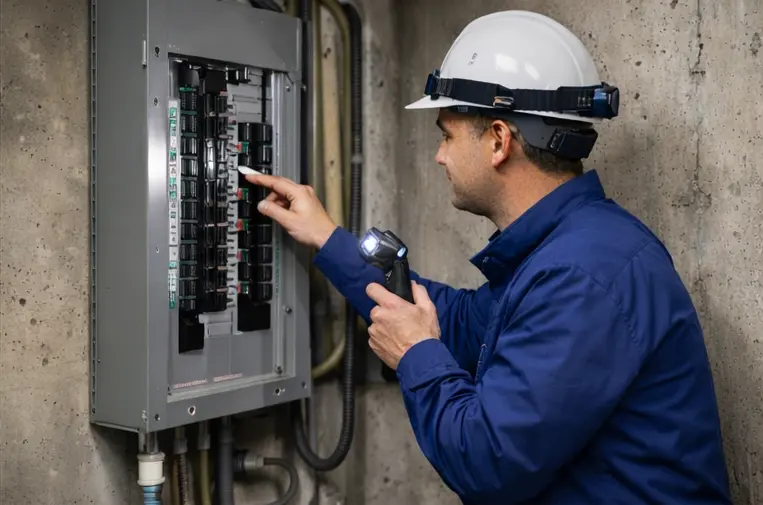
Step 2: Inspecting and assessing the electrical panel
Before any work begins, one of our master electricians will visit your home to inspect your existing electrical system. This visit is essential: it allows us to confirm that your panel has sufficient capacity to power a Level 2 charging station (240V).
If the available power is insufficient, our electrician will suggest options tailored to your situation: upgrading the panel, adding a dedicated circuit breaker, or installing a load control device (LCD)—a solution that often avoids the need for a costly panel replacement.
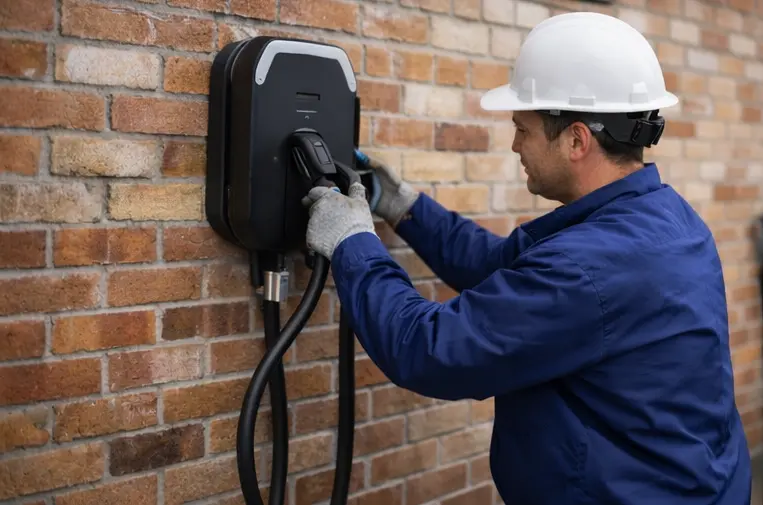
Step 3: Installation by your licensed electrician
On the day of installation, our master electrician will install the dedicated 240V circuit from your panel to the location chosen for the charging station. The charging station is then securely mounted on the wall—indoors or outdoors, depending on your setup—and connected to the circuit.
All our work complies with the Quebec Electrical Code, RBQ requirements, and manufacturer standards. This compliance is essential for your installation to be eligible for the Roulez Vert program.
The average duration of a standard residential installation is half a day. Commercial projects or those in multi-unit buildings may require more time depending on their complexity.

Step 4: Commissioning and Document Handover
Once the installation is complete, our electrician will fully commission your charging station and perform the necessary tests to ensure that everything is working properly. They will also explain how your charging station works and, if applicable, how to set up the mobile app.
You will then receive all the invoices and documents required to submit your reimbursement claim to the Roulez Vert program, properly completed and in compliance with the program’s requirements to maximize your chances of approval.
Installation eligible for the Roulez Vert grant — $600
Frequently Asked Questions About Charging Station Installation
Do you have any questions before getting started? Here are the answers to the questions our customers ask us most often.
Feel free to contact us if you can’t find what you’re looking for.
How much does it cost to install a charging station in Quebec?
The total cost of a standard residential installation is generally between $900 and $2,200, including the charging station and electrical work.
This amount varies depending on the distance between your electrical panel and the charging station’s location, whether your panel needs to be upgraded, and the model of charging station you choose.
With the $600 Roulez Vert grant and a potential municipal grant, your actual cost can be significantly reduced.
What is the subsidy available for a charging station in 2026?
The Roulez Vert program offers a $600 rebate for the purchase and installation of a Level 2 (240V) residential charging station. This program is in effect until December 31, 2026.
Several municipalities in the Greater Montreal area also offer an additional local grant of $150 to $250, which can be combined with the provincial program. In total, you could receive up to $850 in combined rebates.
Do you need to upgrade your electrical panel to install a charging station?
Not necessarily. In most homes, the existing electrical panel has sufficient capacity to accommodate a dedicated 240V circuit.
Our master electrician systematically checks this during the pre-installation inspection.
If the capacity is insufficient, we offer alternatives: upgrading the panel or installing a load control device (LCD), which often makes it possible to avoid a costly panel replacement by intelligently managing the available power.
Which charging station should you choose to charge as quickly as possible?
For fast residential charging, a 40-amp (9.6 kW) Level 2 charging station is generally the best choice.
It offers a charging rate of approximately 37 km of range per hour, which allows most electric vehicles to fully charge in 3 to 4 hours.
Note, however, that charging speed is also limited by your vehicle’s capacity; there’s no need to choose a charger that’s more powerful than what your car can handle.
Our electrician will help you make the right choice based on your vehicle model.
Is a licensed electrician required to install a charging station?
Yes, in Quebec, all electrical work must be performed by an electrical contractor licensed by the Régie du bâtiment du Québec (RBQ).
This requirement applies to the installation of a Level 2 charging station. In addition, hiring an RBQ-licensed master electrician is a mandatory requirement for eligibility for the Roulez Vert grant program.
A non-compliant installation would disqualify you from the grant and could pose significant safety risks to your home.
How long does it take to install a charging station?
A standard residential installation typically takes half a day, or about 3 to 4 hours.
This timeframe may vary depending on the layout of your home, the distance between your electrical panel and the charging station’s location, and whether additional work needs to be done on your electrical panel.
Commercial or multi-unit residential projects generally take longer, depending on their complexity.
Can you install a charging station in a condo or apartment building?
Yes, it is certainly possible, although the installation is more complex than in a single-family home.
The main challenges involve obtaining approval from the condominium association, configuring the shared electrical system, and implementing individual billing per unit.
Les entreprises CTM électrique is well-versed in the realities of Quebec condominiums and can assist you with the technical and administrative procedures, including presenting the project to your condominium association.
Can an outdoor charging station withstand Quebec winters?
Yes, provided you choose the right model. Some charging stations are specifically designed for northern climates, including extreme cold, ice, humidity, and snow.
Look for a minimum IP67 rating for outdoor installation. Brands like FLO Home G5 and Grizzl-E Classic are known for their winter durability in Quebec.
Our electricians will make sure to recommend a model suited to your situation and the intended location.
Licenses and Accreditations of Les entreprises CTM électrique …




CTM Électrique installs products from …